Article: Jewelry Supplier Due Diligence: A Practical Checklist
Jewelry Supplier Due Diligence: A Practical Checklist
Jewelry supplier due diligence starts with three checks: the supplier, the product and the transaction. A promising jewelry purchase needs more than an attractive price. Before committing funds, a buyer should be able to identify the seller, understand what is being offered and trace the documents supporting the transaction.
For businesses sourcing pre-owned jewelry across borders, a consistent review process can make missing information easier to spot. The following is a practical starting point, rather than a complete legal compliance checklist.
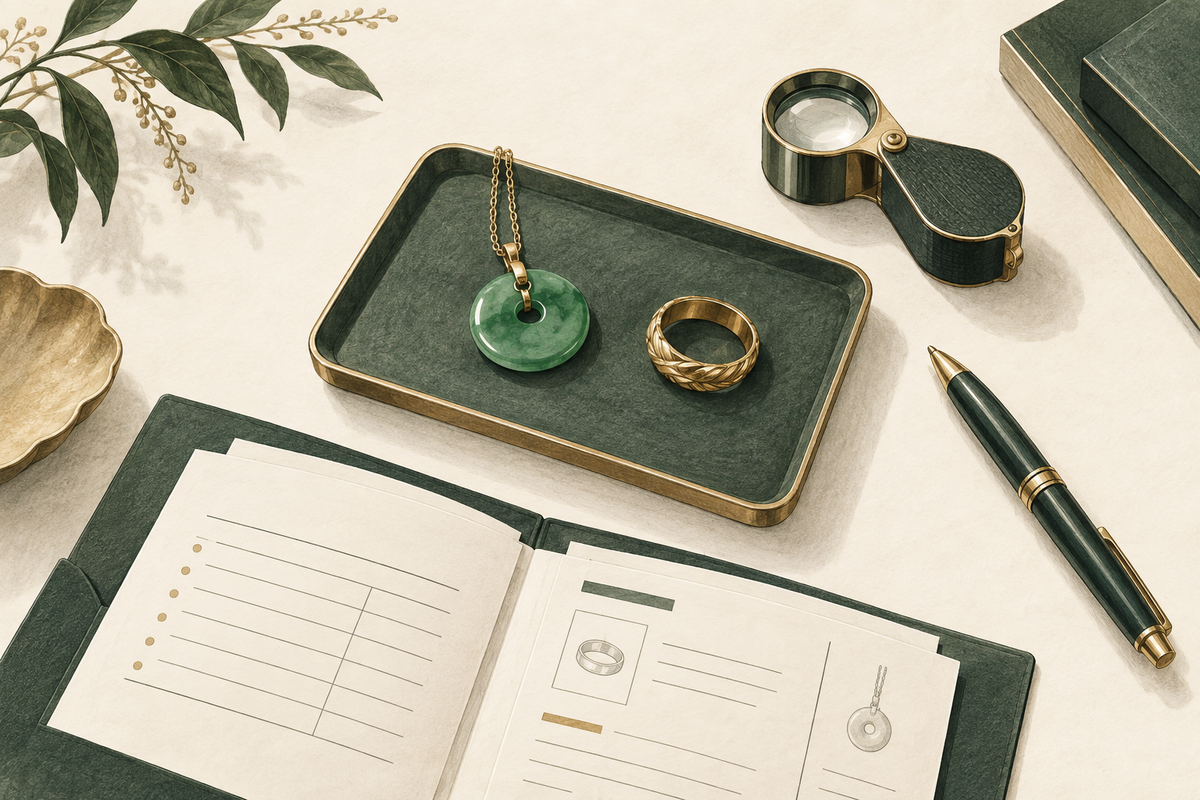
The cover and checklist images are AI-generated editorial illustrations, not photographs of stock or evidence of authentication.
1. Check the jewelry supplier
Create a supplier record containing the legal business name, trading name, address, named contact and independently checked contact details. Record who provided each document and when it was reviewed.
As a practical purchasing control, compare the supplier’s identity with the names on the quotation, invoice and payment instructions. If they differ, obtain and document an explanation before approving payment. A mismatch deserves investigation; it does not, by itself, establish wrongdoing.
FinCEN’s guidance on foreign suppliers supports a risk-based approach. It explains that an overseas supplier is not automatically riskier than a domestic one: the supplier’s controls, location and transaction circumstances all matter. FinCEN, foreign-supplier risk assessment guidance, March 10, 2008.
2. Review product evidence
Business credit information can help assess whether to extend payment terms. JBT describes reports containing payment experience, collection claims, ownership information and other business details. These are useful inputs to a commercial decision, not substitutes for inspecting the merchandise. JBT, Credit Reports.
For each item, keep a separate product record: SKU, actual photographs, measurements, condition observations, supplier descriptions and any available laboratory report. Distinguish statements supplied by the seller from information independently checked.
An industry association logo should never stand in for product evidence. JVC expressly states that it does not provide product certification. JVC, Pre-Audit AML Review for Jewelry Businesses, July 15, 2026.

3. Keep a transaction file
A useful internal file connects the supplier, item and payment. Suggested contents include:
- The quotation, currency, validity period and agreed commercial terms.
- The item’s SKU, photographs and supporting product documents.
- The purchase invoice or consignment agreement.
- Payment instructions, approval and payment confirmation.
- Shipping and customs documents, where applicable.
- Unresolved questions, the person responsible and the final decision.
Keep purchase offers, proposed resale prices and consignment estimates clearly labelled. Recording an estimate as an agreed purchase price can create avoidable confusion.
4. Review your daily process
Written policies are most useful when staff know how to apply them. JVC’s audit-preparation article highlights the importance of matching an AML program to actual business practices, correcting incomplete records and preparing employees to explain their responsibilities. It also notes that a review cannot guarantee an examination’s outcome. JVC, audit-preparation article.
A practical review exercise is to select one recent transaction and ask a colleague to follow its documents from the initial offer to payment and delivery. Record any missing evidence and assign someone to resolve it. This exercise does not replace any required independent compliance testing.
5. Protect private records
Keep private credit reports, personal information and payment details out of public listings and marketing materials. JBT describes trade-reference information as confidential. Use such information only within its permitted purpose and access conditions. JBT, Demystifying Trade References, February 20, 2024.
Before the next purchase, ask: Can we identify the seller, support the product description and explain the payment? Any unanswered question should have a named owner before the transaction proceeds.
Discuss a trade enquiry
Reviewing a particular piece or discussing a supply relationship? Contact Huiliu with your trade enquiry and include the relevant SKU, your business details and the information you need before making a decision.
This article provides general business education, not legal advice or a determination of any company’s AML obligations. Requirements depend on the business and applicable law. It does not certify a supplier, product or compliance program. Public sources reviewed October 7, 2026.